
Why Are There Shingle Granules in My Gutters? A Minnesota Homeowner’s Guide
What those gritty granules can tell you about your roof and when they may be a sign of wear or storm damage.
What Your Gutters May Be Telling You
If you’ve ever cleaned your gutters or looked near a downspout and noticed a pile of gritty, sand-like material, there’s a good chance you’re looking at granules from your asphalt shingles.
Finding some granules is normal, but the amount, age of your roof, and recent weather can all make a difference. Minnesota roofs go through everything from summer heat and hail to snow, ice, and freezing temperatures, so knowing why shingles lose granules can help you understand when it’s simply normal wear and when your roof may need a closer look.
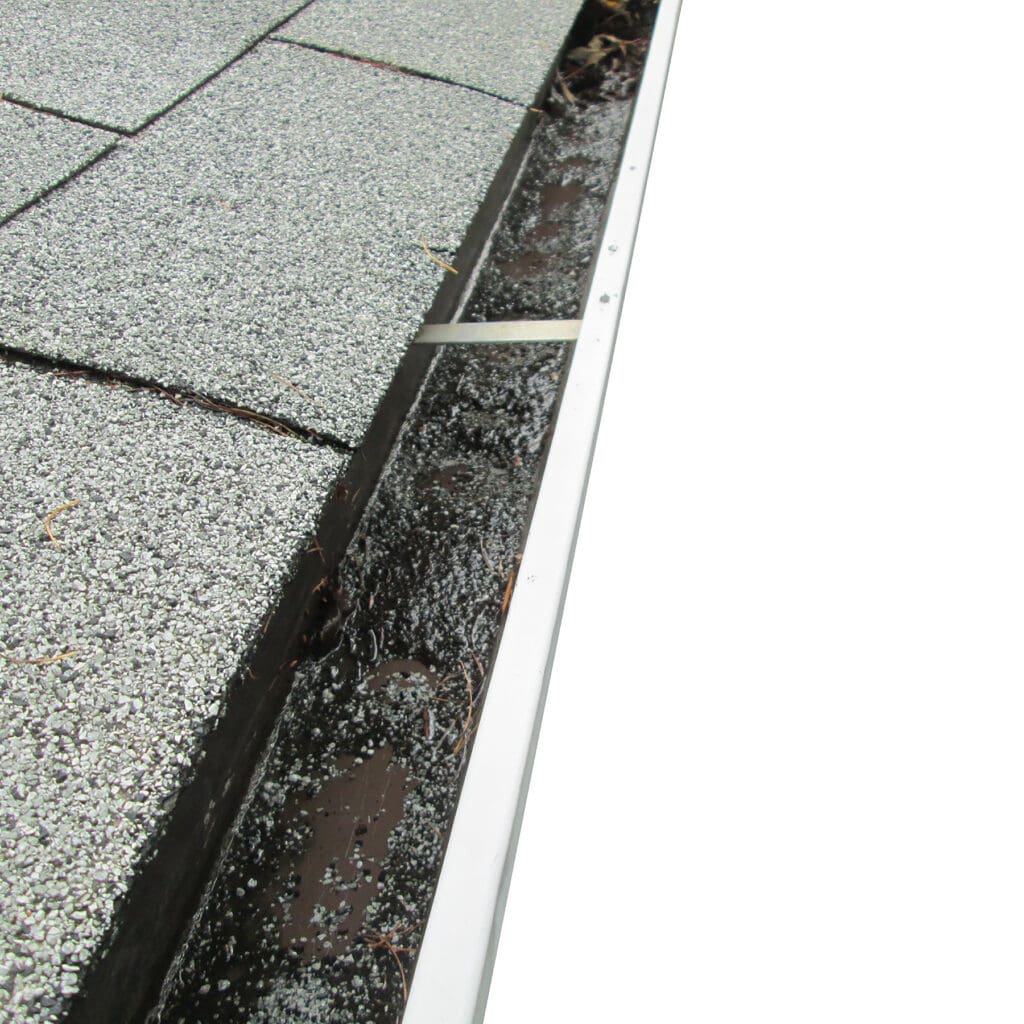
What Are Shingle Granules?
The surface of an asphalt shingle is covered with small mineral granules. They give shingles their color, but they also serve an important purpose by helping protect the asphalt underneath from sunlight and everyday exposure to the elements.
Over time, some of these granules naturally loosen and wash into your gutters when it rains. Seeing a small amount doesn’t necessarily mean there’s something wrong with your roof.
Is It Normal to Find Granules in Your Gutters?
In many cases, yes. New asphalt shingles can shed some loose granules after installation, and older shingles gradually lose granules as they weather and age.
The amount matters, though. A light scattering of granules in the bottom of your gutters is very different from a thick buildup that you can easily scoop or swipe through with your fingers. If granules are accumulating heavily, collecting in piles near your downspouts, or you’re suddenly seeing much more than you have in the past, it’s worth taking a closer look.
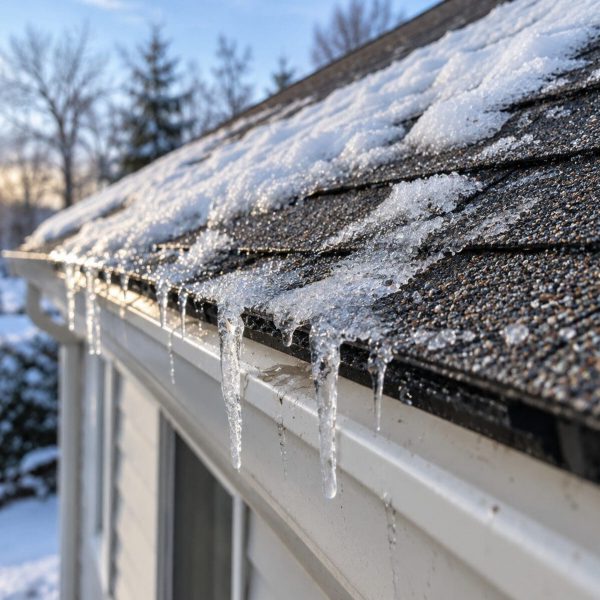
Why Minnesota Roofs Can Lose Granules
Minnesota weather puts roofing materials through a wide range of conditions throughout the year. Hot summer sun, heavy rain, hail, snow, ice, and repeated temperature changes all contribute to the way asphalt shingles age.
Normal weathering happens gradually, but severe weather can sometimes cause more noticeable granule loss in a much shorter period of time. That’s why finding an unusual amount of granules after a storm can be worth paying attention to.
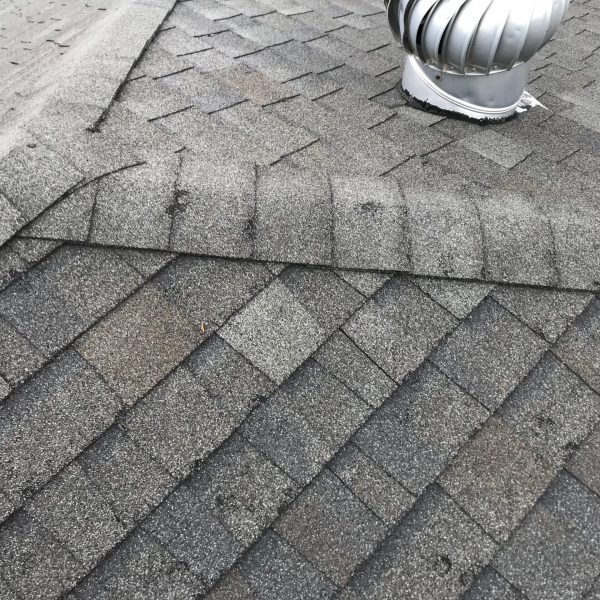
Can Hail Cause Shingle Granule Loss?
Granules in your gutters alone don’t confirm that you have hail damage. Roof age, normal wear, installation, and other factors can contribute to granule loss as well. If you notice a sudden increase following a Minnesota hailstorm, however, it can be one reason to take a closer look.
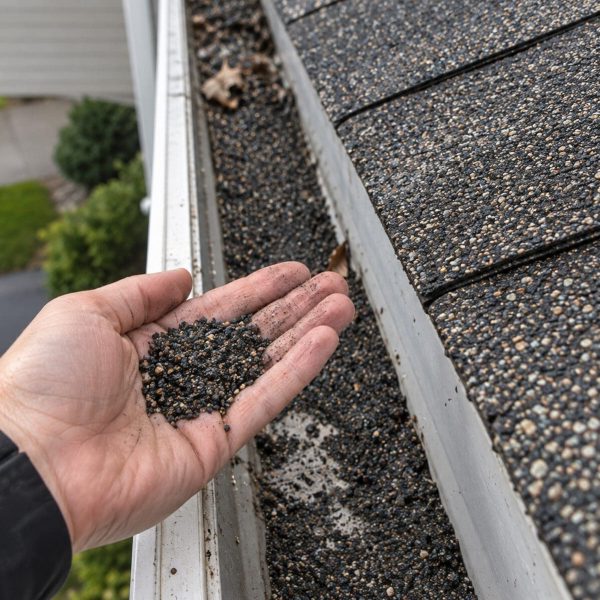
How Much Granule Loss Is Too Much?
There isn’t one exact amount of granule loss that means your roof has a problem. What’s more useful is looking at how much is collecting, whether the amount has changed, and what the shingles themselves look like.
A light layer of loose granules in the bottom of your gutters can be normal. A thick buildup that you can easily scoop or run your fingers through is more concerning, especially if it seems to have appeared quickly. You may also notice granules collecting in piles where your downspouts empty.
Take a look at the roof itself from the ground, too. Shingles with dark or bare-looking patches, uneven coloring, or areas where the granule coating has noticeably worn away are worth having inspected. The goal isn’t to count individual granules, but to recognize when the amount you’re seeing seems out of the ordinary for your roof.
What Should You Do If You Find a Lot of Granules?
If you’re finding a significant amount of granules, you don’t need to diagnose the cause yourself. Take note of when you first noticed the buildup and whether your home has recently been through hail, high winds, or other severe weather.
The next step is to have the roof evaluated. A professional can look at the condition of the shingles and determine whether the granule loss is consistent with normal aging or if there are signs of damage that need attention.
If the granule loss showed up after a recent storm, you can also visit our Storm Damage Resources & Services for more information on what to do next.
Not Sure What Your Roof Is Telling You?
Finding granules in your gutters doesn’t always mean there’s a problem, but a significant change can be worth looking into. If you’re concerned about the condition of your roof, the Ardmor team can take a closer look and help you understand what’s going on.